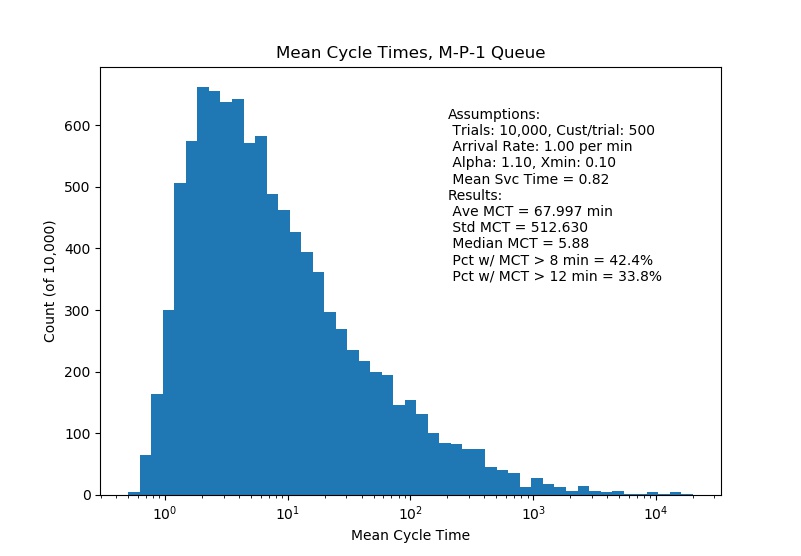
June, 2021. Power Laws Break Things, a paper I submitted to the Military Operations Research Society Symposium in June 2021. I found that, in a simple one-server queuing system, if you assume the server times are exponentially distributed and they are, in fact, power law distributed, your failure rate becomes enormous.
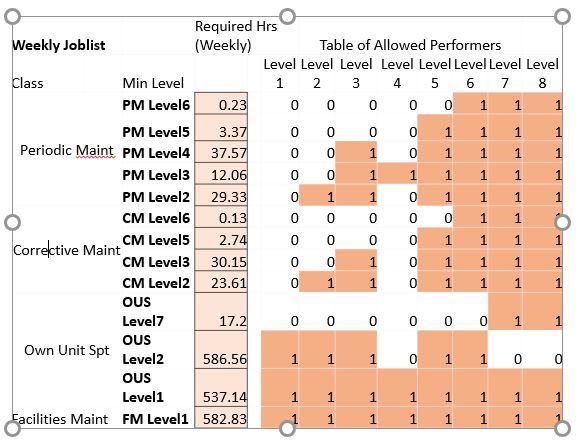
June, 2020. In a manpower planning project, I proposed treating decisions about manning a military command as integer decision variables with continuous constraints. This lends itself to a mixed-integer approach. I presented my methodology at the Military Operations Research Society Symposium.
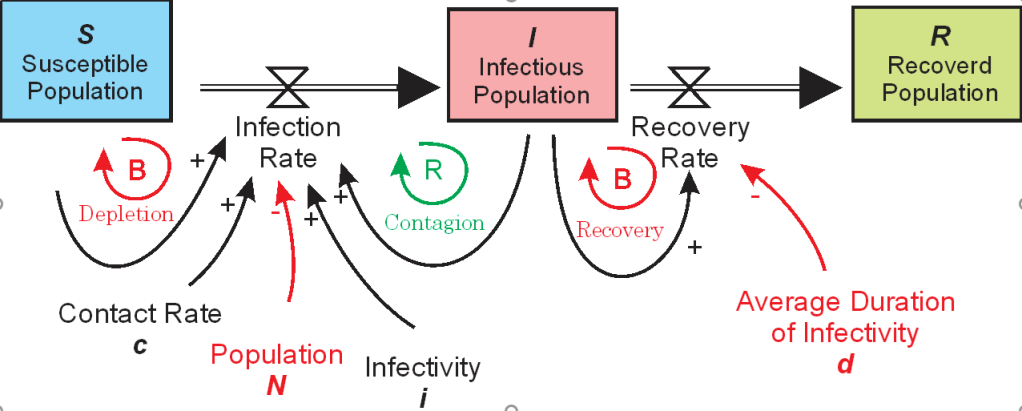
April, 2020. In the early months of COVID, I wrote a paper entitled The Three Most Important Equations in the World. Our operating model for this epidemic was and is the 1927 Susceptible-Infectious-Recovered stock-and-flow model.
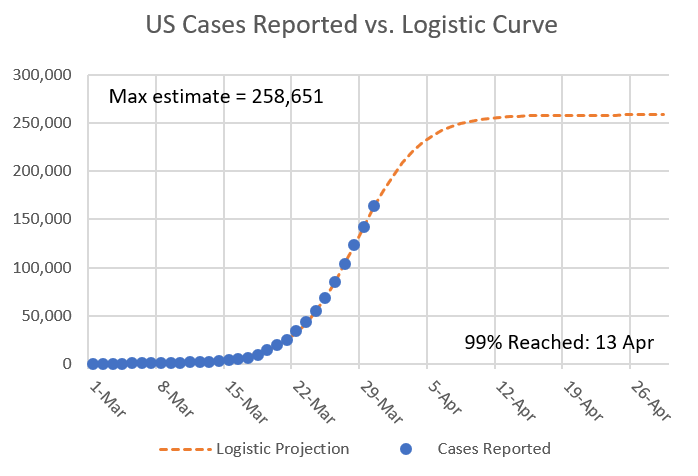
March, 2020. The only model we had (and have) for epidemic spread is the system dynamics (stock-and-flow) model of susceptible, infectious, and recovered populations — the SIR model. In attempting to answer how bad the COVID-19 outbreak would be, I attempted to match the curves during the early phase of the outbreak with the curves predicted by the SIR model. I wrote it up in a series of reports until the authorities began changing definitions. If the definitions of positivity and lethality change mid-stream, a curve-fitting method is out the window.
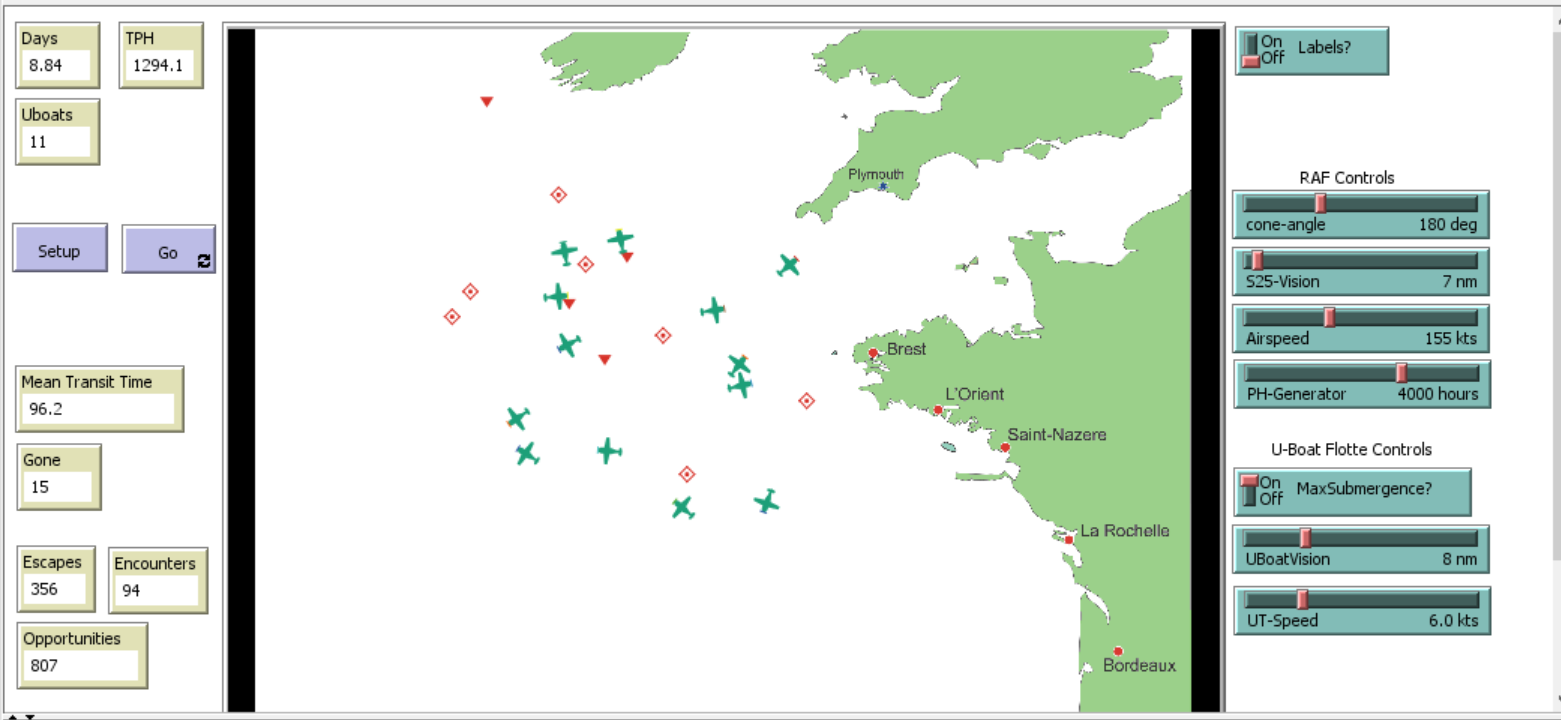
February, 2020. For a number of purposes, I built a NETLOGO model of the Battle of the Bay of Biscay. From 1941 to 1943, the German U-Boote Flotte operated out of five ports in occupied France. The RAF attempted to interdict their movement into the North Atlantic with antisubmarine aircraft. This model is also available on GITHUB.
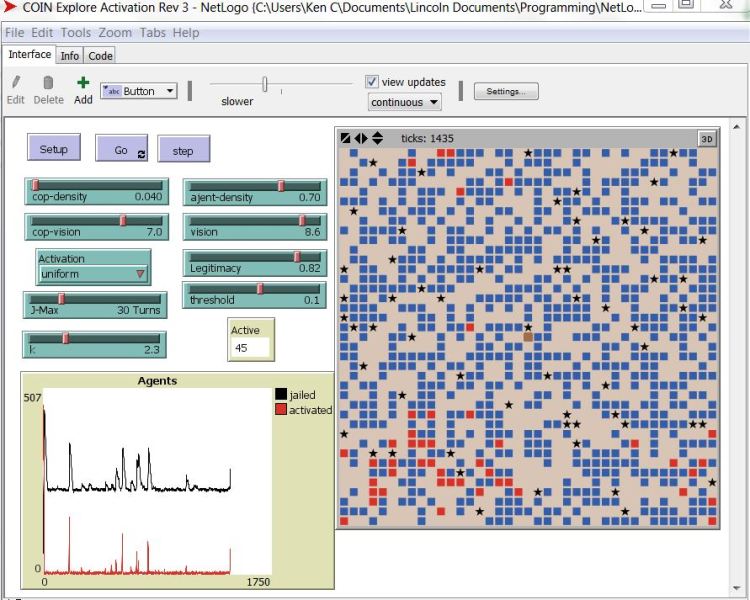
March, 2017. Agent-based models can be incredibly powerful in understanding complex adaptive systems. Once they have been built, they can be easily adapted for computational exploration of policy questions. The key is to include only those details and parameters that are needed for analysis. This is a paper for the Domestic Preparedness Journal on modeling civil revolt.
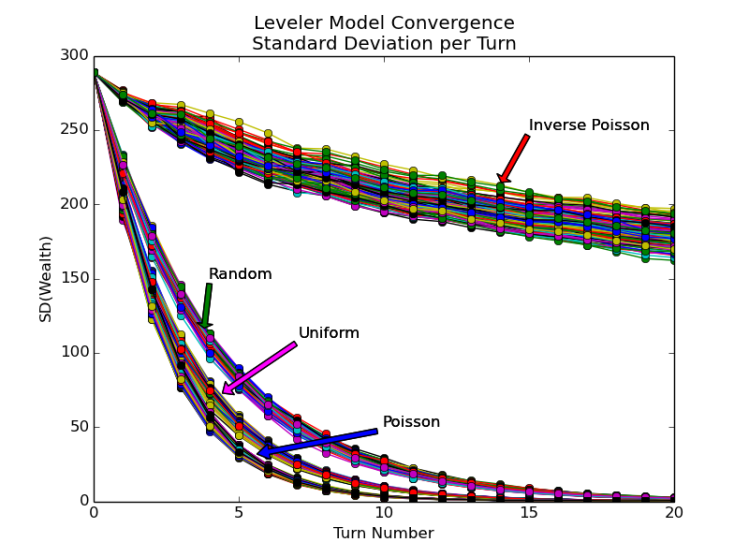
March, 2014. For a third evaluation of activation’s impact, I built a model of wealth redistribution that was proposed by a particle physicist. People interact in pairs and walk away with half the wealth of both. It converges at different speeds depending on who gets chosen first.
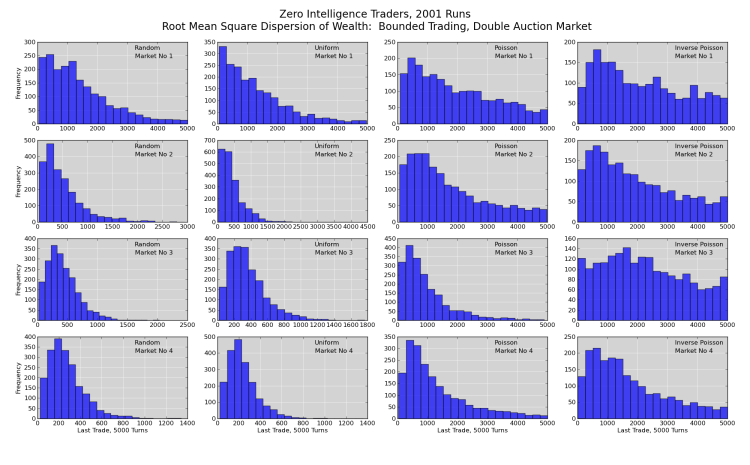
October, 2013. My second investigation on the impact of changing activation involved building and adapting the zero intelligence trader model. Does it make a difference which buyer or seller gets to go first?
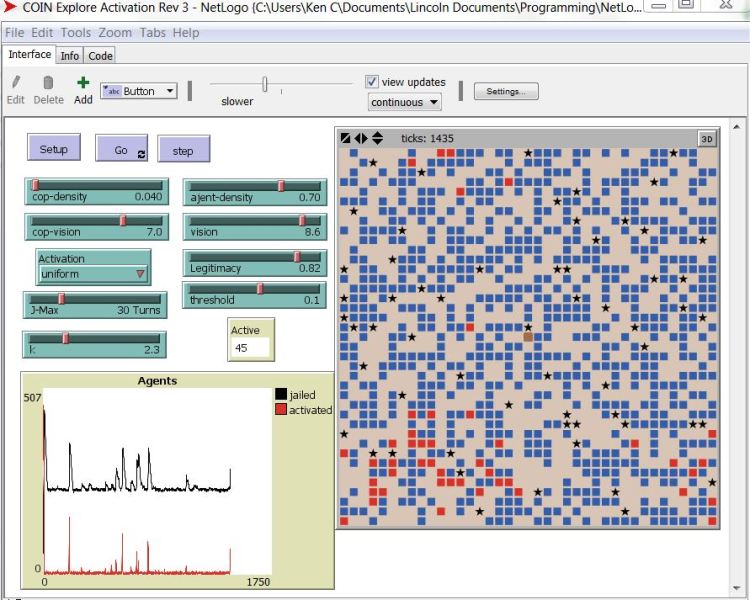
May, 2013. This is my first examination of the impact of different agent activation methods on the outcome of a well-established agent-based model.
 Ken Comer